





What is a pragmatic IFC strategy on fast paced projects?
Agree on MVD scope, use validation servers on every deliverable, and keep native models authoritative while IFC is for exchange snapshots. Document known unsupported entities.
Interoperability tools reduce friction when every stakeholder uses a different stack. They validate translations, heal geometry, map properties, and connect APIs between authoring, coordination, and operations systems. Poor interchange creates silent data loss that shows up as field surprises. Ask how each product handles round tripping, version skew, and large IFC files. Prefer tools that expose logs your BIM lead can audit, not only binary conversions. Build a small library of regression models that represent your hardest exchanges so each upgrade is tested the same way. Use this category when you are standardizing exchange methods across a supply chain or onboarding a new trade with unfamiliar software. Publish exchange recipes in your BIM execution plan so everyone uses the same settings and validation steps.
3D City Database is an open-source CityGML database and toolset for storing, importing, exporting, analyzing, and visualizing virtual 3D
ARES Commander is native DWG CAD software for Windows, macOS, and Linux from Graebert that ties Revit and IFC models to 2D DWG output, with
Bentley iTwin Platform is a cloud developer stack of APIs and services for building infrastructure digital twin applications, with
BIM&CO is a collaborative web platform and manufacturer ecosystem for publishing, searching, and downloading BIM-ready product content,
BIMData is a cloud platform and API for open BIM that combines a multi-format web viewer (IFC, DWG, point clouds, 2D plans) with hosted
Bimeye is Tribia's cloud BIM data service that keeps model-derived information in a shared hub so teams can sync, enrich, and report on
BimRv SDK by Open Design Alliance is a developer kit that reads and writes Revit RVT and RFA files without launching Revit, so another
BIMserver.center is a cloud collaboration hub for AEC that hosts Open BIM projects, federates IFC-based models, and ties into a large
BIMvision is a freeware Windows IFC viewer from Datacomp that opens IFC2x3 and IFC4 building models with a built-in measurement and cutting
Bonsai is a free, open source Blender add-on that acts as a native IFC authoring environment for OpenBIM, so teams can view, edit, and
BricsCAD BIM is the building-focused edition of BricsCAD that keeps native DWG workflows while adding BIM authoring, IFC import and export
Cadmatic is an engineering software suite for shipbuilding and industrial plants that connects 3D design, P&IDs, and project data, with a
CAD-Recode is an open research model that predicts executable Python CadQuery scripts from 3D point clouds so engineers can inspect, edit,
Cadwork is a modular CAD, CAM, and BIM suite aimed at timber and engineered-wood projects, combining detailed 3D modeling with IFC exchange,
Catenda Hub is a browser-based open BIM common data environment from Catenda that hosts IFC models, BCF issues, and project documents with
Cesium is an open 3D geospatial platform that combines CesiumJS and game-engine integrations with Cesium ion cloud tiling and streaming for
Cityweft is a geospatial 3D context platform for AEC teams that delivers meshed buildings, terrain, and textures for any site with exports
Datakit CrossManager is CAD and BIM interoperability software that converts native and neutral 2D or 3D files, including Revit and IFC data,
Dlubal RFEM 6 is a Windows finite element program for structural engineers that models members, plates, shells, and solids, and can exchange
Dynamo is an open-source visual programming platform that wires nodes into graphs so AEC teams can automate geometry, parameters, and data
Enji.io is a cloud-first platform for structural engineering calculations that pairs a formula editor with reusable calculation libraries,
FME by Safe Software is a data integration platform with FME Form for no-code ETL authoring, FME Flow for automation, and native readers for
FreeCAD is an open-source parametric 3D modeler whose integrated BIM Workbench authors buildings with native IFC editing through
Geometry Gym is a family of Rhino, Grasshopper, Revit, Tekla, Navisworks, and structural-analysis add-ons focused on openBIM IFC exchange,
Hypar is a cloud space planning application that converts programs and constraints into quantified 3D options in the browser, then supports
IDEA StatiCa is structural design and code-check software for steel connections, concrete details, and anchoring that links to CAD and FEA
IfcOpenShell is an open-source IFC toolkit and geometry engine that reads and writes Industry Foundation Classes files with a LGPL-licensed
IPX is a scan-to-BIM and as-built documentation service and web platform from Integrated Projects that combines optional on-site scanning
Konstru is a web-based common data environment for structural and BIM workflows that syncs, views, edits, and compares models between Revit,
Krafzen is a voice-driven design assistant for building projects that turns spoken instructions into DWG, DXF, and MEP CAD drawings with
Meshmatic is a Windows desktop application from VRSQUARE that converts and optimizes heavy CAD assemblies into lighter polygon meshes for
Open IFC Viewer is a free, locally run IFC desktop viewer from Open Design Alliance that pairs fast large-model visualization with
PointFuse is legacy reality-capture desktop software that turns registered point clouds into classified mesh geometry for BIM and CAD
Pollination is a building performance simulation platform that exports valid energy model geometry from Revit and Rhino to EnergyPlus,
RealityScan is Epic Games' desktop photogrammetry application (formerly RealityCapture) that rebuilds triangle meshes and textured models
RISA-Revit Link is a bi-directional integration between Autodesk Revit and RISA structural analysis products (RISA-3D, RISAFloor,
SCIA Engineer is a Windows based structural analysis and multi material design platform that keeps modeling, finite element analysis, code
Simplebim is a Windows desktop IFC processing application from Datacubist that merges open BIM models, runs repeatable dataflow recipes to
SOFiSTiK is a structural engineering and BIM software family from Germany that ties finite element analysis, member design, reinforcement
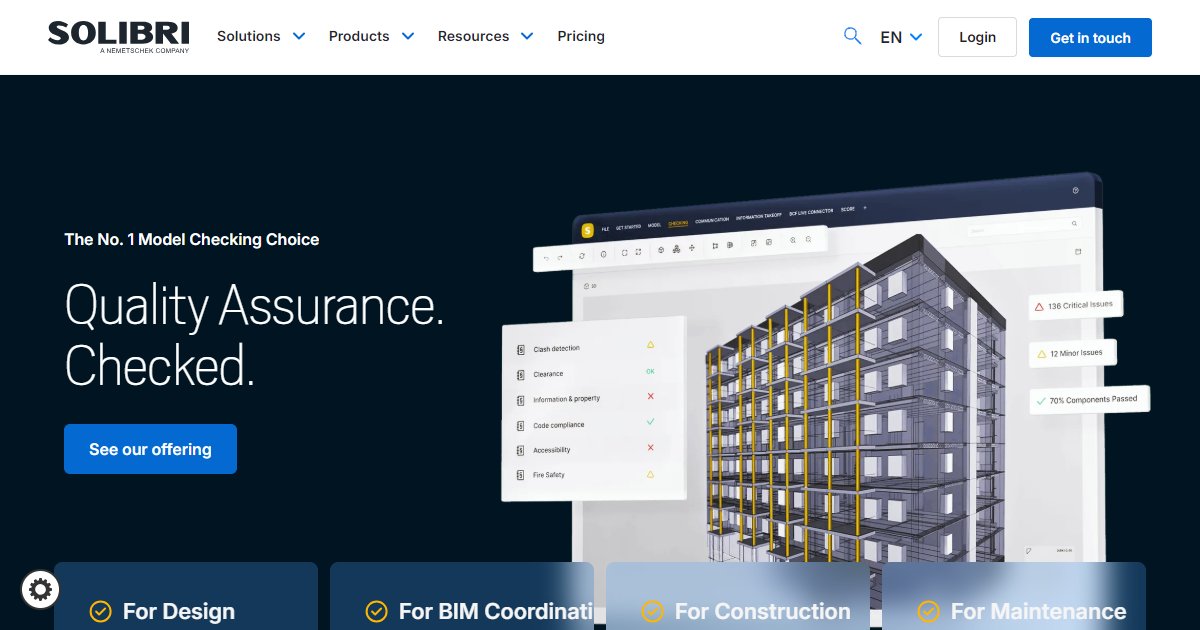
Solibri is IFC-first BIM quality assurance software that checks federated models for geometry, clashes, clearance, information completeness,
Solibri Anywhere is a no-cost Solibri model viewer for stakeholders who need read-focused access to BIM data on site or in meetings, with
Solibri CheckPoint is a browser-based BIM quality assurance service that runs clash, data validation, and free-space checks on combined
Solibri Office is a desktop BIM quality assurance and coordination application that imports IFC models from major authoring tools, runs
Speckle is an open AEC data platform that publishes versioned model commits from desktop connectors into a cloud workspace for 3D viewing,
StruBIM Suite by CYPE is a Windows structural BIM suite that links IFC-based building models to analytical models, steel and concrete member
StruSoft is a Swedish structural software house whose flagship FEM-Design package delivers 3D finite element analysis and member design for
That Open Components is the free MIT-licensed JavaScript library @thatopen/components, used with Three.js and web-ifc so developers can
That Open Engine (Open BIM Components) is a free MIT-licensed JavaScript toolkit that layers IFC import, editing, navigation, and export on
A Rhinoceros add-on for architectural BIM, VisualARQ adds parametric building objects, live 2D documentation from the model, quantity
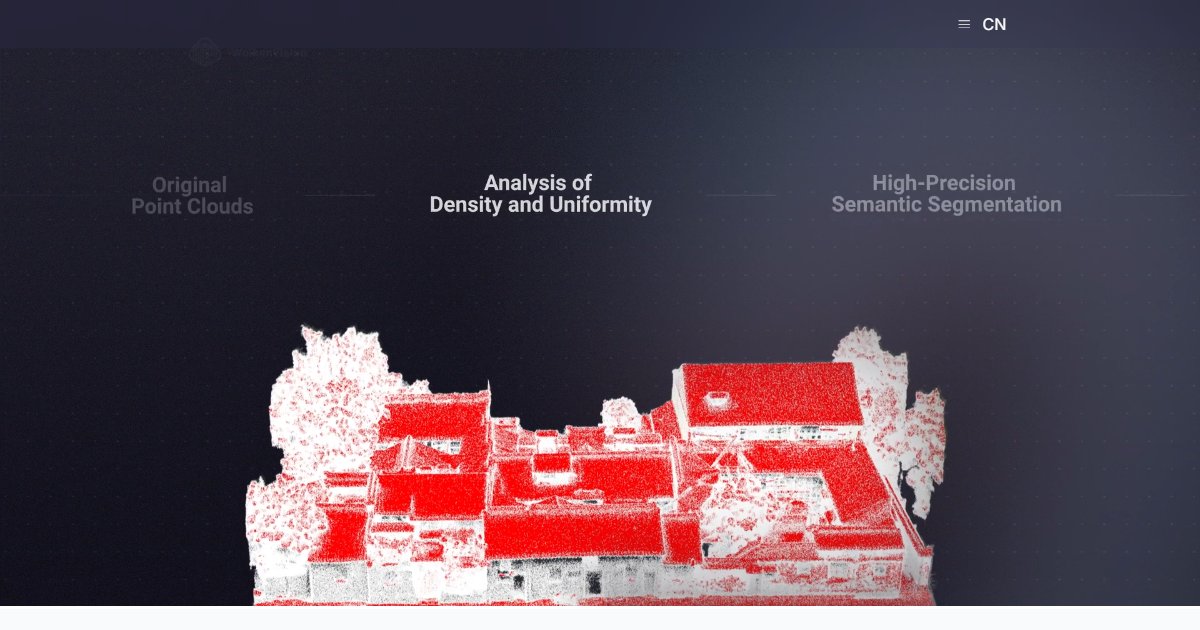
WolkenVision is a scan-to-BIM and point cloud software family that combines desktop and cloud modules to segment, correct, and model large
xeokit is a JavaScript BIM viewer SDK, maintained by xeolabs with Creoox AG support, that loads large AEC models in the browser using WebGL,
Agree on MVD scope, use validation servers on every deliverable, and keep native models authoritative while IFC is for exchange snapshots. Document known unsupported entities.
Build a benchmark project with curved geometry, penetrations, and nested families. Compare counts, volumes, and critical properties before go live.
Name formats, validation tools, acceptance criteria, and rework responsibility when data fails checks. Align with digital twin exhibits if used.
When data changes hourly, when security requires tokens, or when you need selective element updates instead of full model reloads.
Fewer duplicate models, cleaner handover to FM, and faster answers during disputes because lineage is clearer.
BIM Tools Hub lists many exchange focused products so teams can discover options beyond default exporters.