Speckle
Speckle is an open-source interoperability platform for AEC that moves BIM and design data through versioned cloud streams and desktop connectors so teams can publish and load live geometry and parameters across Revit, Rhino, Grasshopper, and many other tools without depending on file-only handoffs.

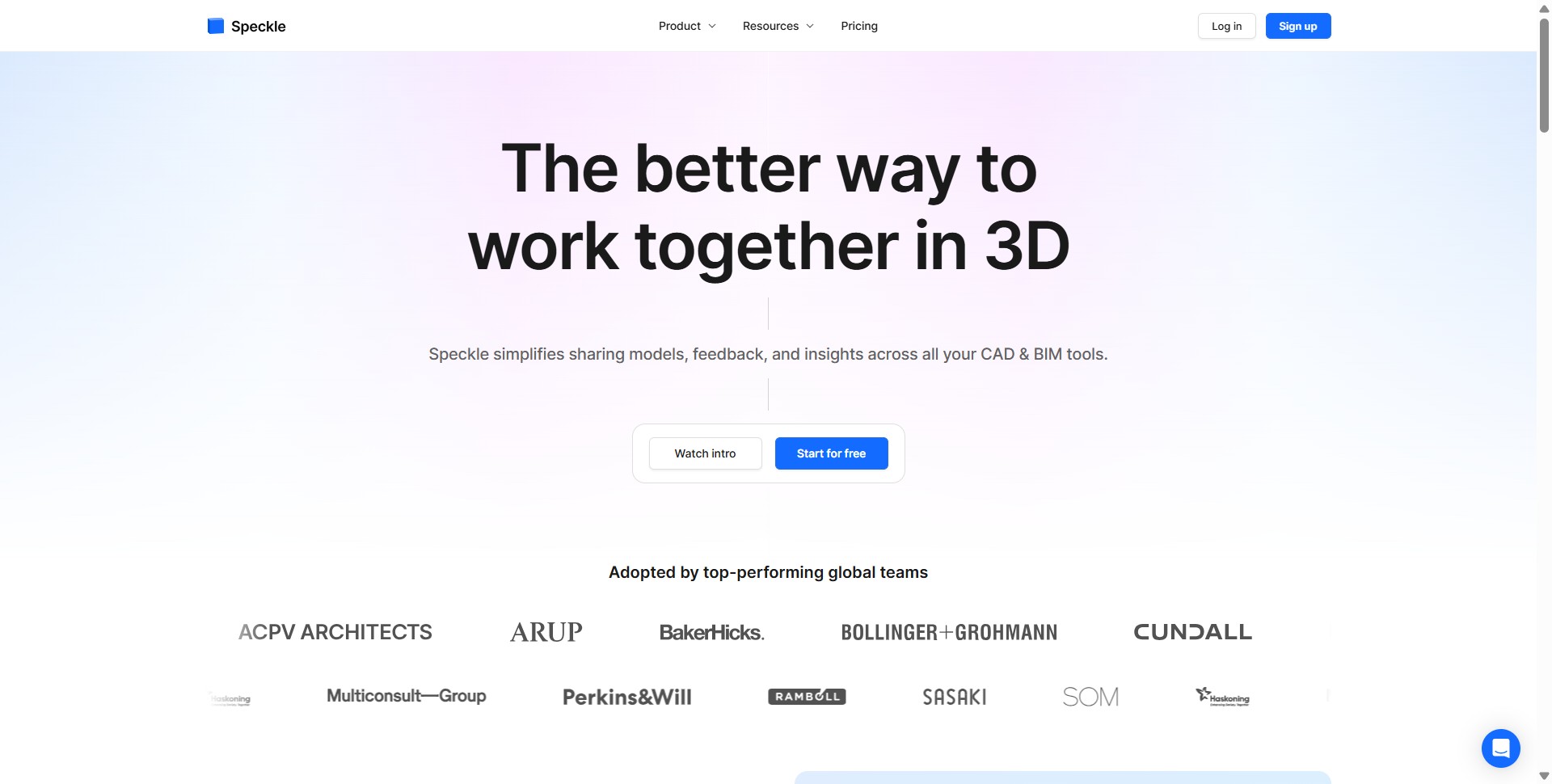
Speckle's public homepage reports more than 146,000 projects and over 11,800 organizations using its platform (Speckle, 2026). The product delivers open data infrastructure for architecture, engineering, and construction, pairing a cloud workspace with desktop connectors and a browser-based 3D viewer.
Instead of sharing only static snapshots, teams publish structured geometry and parameters into streams so downstream tools receive typed elements where connectors support it. Commits create an auditable trail, which helps coordination when many authors touch the same project.
Developers can integrate through documented APIs, and Speckle Automate appears in Enterprise-oriented rows on Speckle's plan comparison for automation-heavy deployments. Intelligence dashboards and model checks are described on Speckle's product pages as ways to turn streamed data into review and analytics workflows.
The Explore plan is free with project, user, and history caps, while Team listed at $99 per month for small teams on Speckle's pricing page (Speckle, 2026). Enterprise pricing is custom and adds items such as expanded data regions and advanced security options; confirm every limit before you buy.
Specifications
Pricing
Platforms
Used for
Used by
Tasks
Pros and cons
Pros
- Open-source connectors and server code give teams visibility into behavior and community extensions.
- Broad connector coverage spans common BIM, CAD, and visualization tools instead of locking you to one vendor stack.
- Browser viewing lowers friction for reviewers who only need read access to coordinated models.
Cons
- Workspace, project, and history limits on free and small paid tiers require upfront capacity planning.
- Advanced automation such as Speckle Automate sits in Enterprise-oriented rows on Speckle's comparison table.
- Cloud-centric streaming assumes network availability and clear data residency choices for regulated work.
Key features
Connectors: Desktop plugins publish and load structured geometry and parameters for many AEC and design tools.
Web viewer: Open federated models in the browser for review workflows that do not require a host CAD install for every stakeholder.
Versioned streams: Commit-based history helps teams see what changed and compare states during coordination.
Speckle Intelligence: Dashboards and model intelligence features scale with paid tiers on the vendor pricing comparison.
CDE-oriented integrations: Team and Enterprise plan tables reference Autodesk Construction Cloud sync alongside other data paths.
Open APIs: REST and GraphQL endpoints support custom integrations; confirm fair-use details in Speckle documentation.
File paths: Drag-and-drop and file importers complement live connectors on the plans that list those features.
Enterprise options: Rows for Enterprise mention data regions, SSO, and security review support for regulated environments.
Pricing
Explore
per month
Free
Free tier with project and history limits per speckle.systems/pricing; verify live page.
Enterprise
Contact sales
Custom quote; includes Automate and advanced controls on vendor comparison. Confirm scope in contract.
Team
per month
$99.00
Listed $99/mo on vendor pricing page (Speckle, 2026); confirm annual billing if offered.
Frequently asked questions
Is Speckle free?
Speckle offers a free Explore workspace with caps on projects, users, and version history on its pricing page. Paid Team and Enterprise tiers raise limits and add items such as CDE integrations and enterprise security options. Speckle also links an academia program from the pricing page for qualified students and educators.
Does Speckle replace IFC deliverables?
Speckle focuses on live structured exchange between tools through streams and connectors. IFC remains common for contractual handoffs and openBIM deliverables. Many teams use IFC where the contract requires it and Speckle for day-to-day multi-tool coordination; always follow your project BIM execution plan.
Can stakeholders view Speckle models without CAD licenses?
Speckle provides browser-based viewing and review flows so people can open and navigate models without installing Revit or Rhino. Exact roles, entitlements, and viewer counts still depend on your workspace plan and how administrators assign access; confirm current terms on Speckle's pricing and documentation pages.
What is Speckle Automate?
Speckle Automate is Speckle's automation surface for running checks and workflows against streamed project data. Speckle's public plan comparison lists Automate under Enterprise-oriented offerings rather than every entry tier. Verify feature gates, limits, and support levels before you rely on it in production.
How much does Speckle Team cost?
Speckle listed Team at $99 per month on its pricing page when reviewed (Speckle, 2026). Annual billing, taxes, and currency conversion can change what you pay at checkout. Treat list prices as indicative and confirm the live checkout or quote for your region.
Can organizations self-host Speckle?
Speckle publishes open-source server components that teams can run on private infrastructure when operations and security policies require it. Speckle Cloud follows the vendor's hosted plans and feature matrix. Choose self-managed or SaaS based on your IT controls, uptime targets, and support expectations.