Blocktype
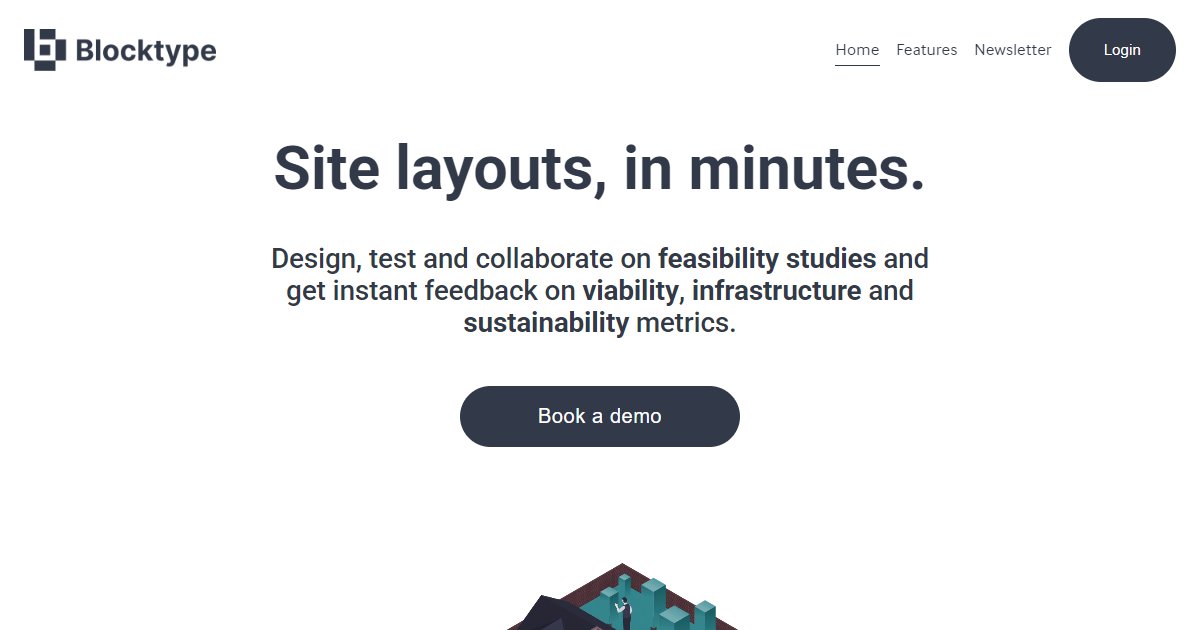
Blocktype is a web-based UK-focused feasibility platform for housing sites that helps teams lay out typologies, streets, parking, and open space, then review planning-policy-style checks alongside viability outputs such as gross development value and build cost indications.

Residential feasibility often repeats the same manual steps: sketch masses, estimate tenure mix, and reconcile parking, overlooking, and policy tests before a scheme hardens in BIM. Blocktype frames itself around faster site layout exploration with a library of house and apartment block types; the public site also cites founder experience that includes more than 1,500 pre-application cases in a prior London planning role, which reflects deep UK planning exposure behind the product (Blocktype, 2026).
The workflow highlights policy-oriented checks such as affordable housing requirements, community infrastructure levy-style inputs, parking standards, and overlooking distances, paired with sustainability-oriented constraints referenced in marketing copy such as biodiversity areas and wheelchair-accessible or high energy performance home types where offered.
Financial views emphasize gross development value logic tied to unit assumptions, plus site-wide cost elements the vendor describes as including abnormals, so teams can compare scenarios while still treating outputs as decision support rather than a substitute for professional advice.
Public pricing is not listed on the pages reviewed here; access is positioned around booking a demo. Treat outputs as indicative and confirm methodology, regions, and updates with Blocktype and your professional advisors before relying on them for bids or submissions (Blocktype, 2026).
Specifications
Pricing
Platforms
Used for
Used by
Tasks
Pros and cons
Pros
- Strong UK planning-policy framing for housing feasibility workflows
- Combines geometric layout with viability-style outputs in one browser experience
- Transparent FAQ entries on methodology topics such as CIL and GDV calculation behavior
Cons
- Public materials emphasize demos rather than transparent list pricing
- Scope is housing feasibility oriented rather than full detailed BIM authoring
- Policy automation depends on how current local inputs are in the product for your authority
Key features
Housing typology library: Start from configurable house and apartment block patterns with controls for mix, height, and accessibility-related options described by the vendor.
Site layout: Add roads, parking layouts, and open space elements including play space, gardens, and biodiversity-related areas.
Policy checks: Review inputs aligned to UK planning policy themes such as affordable housing, parking standards, and overlooking distances where the tool encodes them.
Viability views: See gross development value and build cost style outputs, including site-wide abnormal cost handling as described publicly.
Collaboration positioning: Marketing emphasizes designing, testing, and collaborating on feasibility studies with feedback loops for teams.
Pricing
Contact for pricing
Contact sales
No public list price on pages reviewed; book a demo for quotes.
Frequently asked questions
Is Blocktype only for England?
The marketing and policy language read UK-oriented, with references to Department for Levelling Up, Housing and Communities data in FAQ material. Confirm Northern Ireland, Scotland, and Wales coverage with the vendor if your site sits outside England.
Does Blocktype replace an architect?
No. It is a feasibility and layout aid. You should still apply professional design judgment, local validation, and statutory processes appropriate to your project.
How does Blocktype estimate Gross Development Value?
The FAQ states GDV updates as you change unit counts and values, with starting comparables you can override. Treat figures as model outputs and confirm assumptions for finance decisions.
Can Blocktype export to CAD or BIM?
The public homepage emphasizes layout and metrics rather than listing a specific Revit export. Ask the vendor for the latest interoperability options during a demo.
Where does policy data come from?
The FAQ explains that some datasets are curated from local authority documents while certain national layers are pulled from government sources such as DLUHC data feeds for topics like conservation areas and flood zones.
Can teams add custom unit types?
The FAQ states custom unit types can be supported by collaboration, requiring scaled drawings and rules of thumb, coordinated through the vendor help channel.