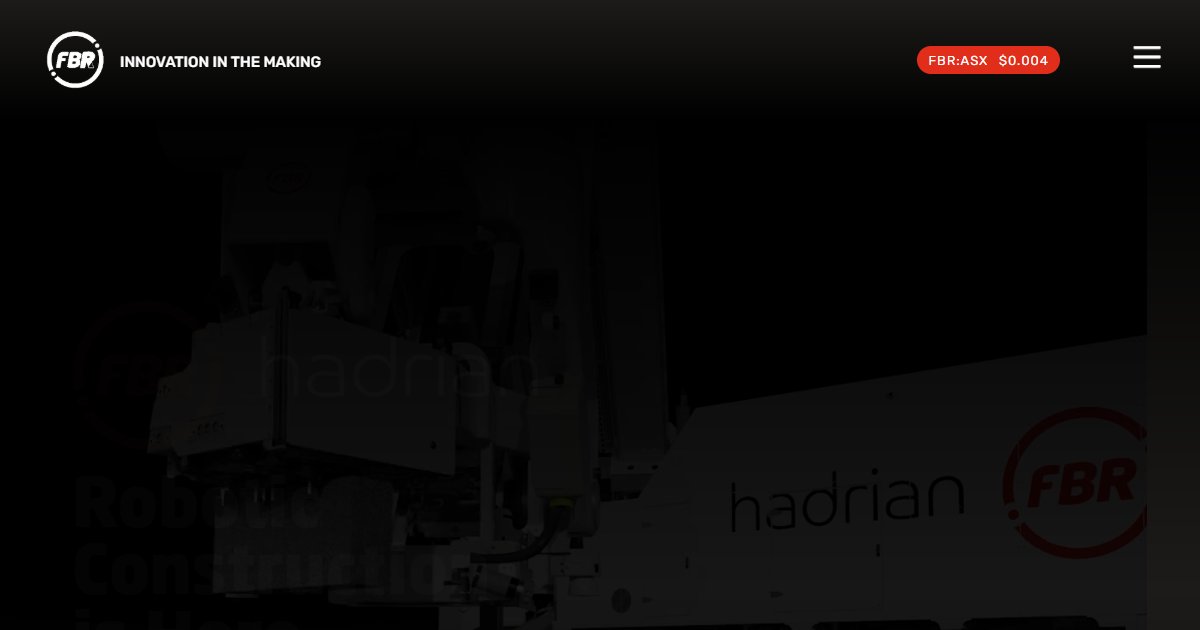
FBR Hadrian
FBR Hadrian is a truck-mounted autonomous brick- and block-laying robot from Australian robotics firm FBR that uses Dynamic Stabilisation Technology to place load-bearing masonry walls on site from commercially available units, with vendor-published peak rates up to three hundred sixty blocks per hour and about thirty-two metres of horizontal reach.

Hadrian targets structural masonry packages where manual crews struggle with speed, consistency, and exposure to repetitive lifting. The system rides in a cab-over truck for road transport, extends a long telescopic boom, and runs proprietary software that converts wall designs into individual block placements with adhesive bonding rather than traditional mortar beds in the vendor???s Fastbrick Wall System story.
Technical sheets on FBR???s product page list a thirty-two metre telescopic boom, block sizes up to six hundred by four hundred by three hundred millimetres weighing up to forty-five kilograms, and a stated maximum lay speed of three hundred sixty blocks per hour (FBR, 2026). The same page claims a two-person operating crew split between a Hadrian operator and a telehandler operator under normal deployment assumptions.
FBR publishes a base equipment price of seven point eight million Australian dollars subject to specifications, optional extras, and tariffs, which gives buyers an order-of-magnitude anchor rare in construction robotics (FBR, 2026). You must still model freight, training, spare parts, geotechnical setup, and local code acceptance before you treat that figure as total cost of ownership.
Beyond housing, FBR markets Hadrian for townhouses, commercial shells, and childcare-type projects. Success hinges on compatible block supply, geotechnics for truck positioning, and inspector comfort with adhesive masonry systems, so plan peer reviews with structural engineers and building officials early.
Specifications
Pricing
Platforms
Used for
Used by
Tasks
Pros and cons
Pros
- Publishes detailed performance figures, crewing model, and even a list base price, which helps CFO due diligence.
- Addresses a trade that is still manual on most sites despite BIM progress upstream.
- Modular hardware design is marketed for easier maintenance swaps in the field.
Cons
- Very high capital cost limits buyers to large contractors or equipment lessors.
- Wind, rain, and substrate conditions still constrain deployment despite stabilization tech.
- Local building officials may require extra testing evidence for adhesive masonry acceptance.
Key features
Dynamic Stabilisation Technology (DST): Patented active stabilization so the boom can place blocks accurately outdoors despite vibration.
Shuttle block delivery: Handles a range of commercial blocks, including large-format units up to vendor-stated size and weight limits.
Telescopic reach: Roughly thirty-two metres of reach to work multi-storey faces from a roadside setup position.
Software-driven placement: Converts wall designs into machine instructions to reduce manual layout rework.
Fastbrick Wall System: Uses supplier-specified adhesive bonding and block families rather than conventional mortar-only construction.
Pricing
Hadrian base configuration (list)
A$7,800,000.00
FBR published base price AUD 7,800,000 on fbr.com.au/view/hadrian-x as of 2026-04-11; excludes options, tariffs, freight, and training.
Frequently asked questions
How much does a Hadrian robot cost?
FBR lists a base price of seven point eight million Australian dollars on the Hadrian product page, noting that final cost depends on specifications, optional extras, and tariffs (FBR, 2026). Convert to your currency and add logistics, training, insurance, and financing.
How fast can Hadrian lay blocks?
Marketing materials cite speeds up to three hundred sixty blocks per hour under ideal conditions (FBR, 2026). Real productivity depends on block supply, truck positioning, weather, and QC holds.
What crew does Hadrian need?
The vendor specifies a two-person crew: one Hadrian operator and one telehandler operator in standard documentation (FBR, 2026). Verify actual staffing with your safety plan and union agreements.
Does Hadrian work with any brick?
The shuttle system is described as compatible with many commercial blocks plus future large formats, but bond patterns, tolerances, and adhesive compatibility must match FBR???s approved list. Run samples before you promise architects full design freedom.
Is FBR a public company?
The corporate site notes FBR trades on the ASX and OTCQB, which matters for investors reviewing counterparty risk (FBR, 2026). That does not guarantee product availability in every country.
Can Hadrian build multi-storey walls?
FBR states the boom can construct walls up to about three storeys high from the roadside and can lay within fifty millimetres of existing structures under documented conditions (FBR, 2026). Confirm with structural engineers for your seismic and wind cases.